
"temperature change"
10000 article(s) found

Popular science | changes in coffee bean roasting
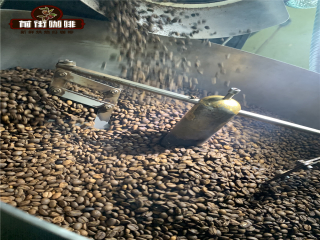
Professional baristas please pay attention to the coffee workshop (Wechat official account cafe_style) coffee fruit after harvesting and processing into coffee raw beans, and coffee raw beans must be roasted to become a common coffee bean on the market, roasted at high temperature will give off aroma, color darker, and coffee raw beans roasted will produce the following phenomena: (1) weight loss: coffee raw beans at more than 200 ℃
Boutique Coffee Science understanding Roasting Coffee roasting degree roasting Coffee percentage what do you think
The average chemical composition of raw coffee beans is as follows: water 12%, nitrogen 12%, fat 12%, sugar and dextrin (dextrine) 10%, other non-nitrogen substances 18%, dust 4%, tannin 6.7%, caffeine 1.2%, coffee essential oil 0.1%. Of course, these data are not

Climate change threatens global coffee supply to wild coffee or extinction
The Australian non-profit Climate Research Institute (Climate Insititue) released a report this month warning that climate change will seriously endanger coffee supplies around the world. The report, entitled Storm in the making, details the impact of climate change on coffee farms and predicts future coffee supplies. The study predicts that temperatures will continue to rise by 2050.

The Best Water temperature for making Coffee A thermometer for brewing coffee
Coffee needs temperature balance since the PID temperature control system was installed in the coffee machine, there has been a frenzy of temperature control. Professionals said: we need more accurate temperature! almost all manufacturers have no objection to this. When we think about these changes and developments, some people may ask: in such a busy bar, is the precise temperature control of the machine so important? Common sense of science

Introduction to video tutorials of coffee foaming skills
Introduction to the video course of coffee milking skills: 1, the first empty steam pipe, remove condensed water, get dry steam; 2, take the steam pipe, put into the vat of milk; 3, turn on the steam, close to the surface of the milk, feel the temperature change with the hand; 4, stretch the foam, control the appropriate amount of steam, feel the temperature change with the hand; 5, adjust the angle, moderate whirlpool and foam

Hand brewed coffee varieties recommend which kind of coffee beans are suitable for making hand brewed coffee.
Professional coffee knowledge exchange more coffee bean information please follow the coffee workshop (Wechat official account cafe_style) | what coffee beans / coffee powder should be used for hand-made coffee? Hand-brewing coffee is a ritual to slowly filter and extract coffee. The greatest charm of hand-brewing is also because it is full of all kinds of uncertainty. So, in principle, hand-brewing coffee can be applied to any variety.

The effect of temperature on Coffee how to feel the Coffee Flavor during High temperature and cooling
Have you ever had the experience of getting a cup of hot coffee, only to find that the flavor and aroma are different when it is cooled? When this happens, you may start to drink delicate flavors and aromas that you couldn't taste before. You may find that your coffee now has a distinct sweet, fruity or floral flavor. This change in flavor is due to specific chemical reactions triggered by temperature fluctuations.
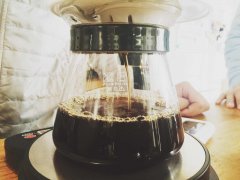
What is the temperature of water needed to make coffee? the best temperature for coffee.
Coffee needs temperature balance since the PID temperature control system was installed in the coffee machine, there has been a frenzy of temperature control. Professionals said: we need more accurate temperature! almost all manufacturers have no objection to this. When we think about these changes and developments, some people may ask: in such a busy bar, is the precise temperature control of the machine so important? Common sense of science

The roasting procedure of high-quality coffee learning coffee roasting
Coffee roasting is the coking of raw coffee beans at high temperature. Roasting completely changes the substances inside the raw beans to produce new compounds, which are recombined to form aroma and mellow flavor. And this effect will only happen at high temperature, if you only use low temperature, it will not cause decomposition, no matter how long the coffee beans are not cooked. Most people think that baking is nothing, just using firefighters.

Do you have to understand the chemical reaction in coffee roasting? the change of coffee beans in the boiler
Communication among professional baristas follow the coffee workshop (official Wechat account cafe_style) aside, the physical changes of coffee beans during heating are already quite complex: the same bean is fried in the same way (that is, the same roasting curve), but the taste is not necessarily the same. Some enthusiasts like to stick graphs on their bags when communicating, although this is helpful to test beans.
The process of roasting coffee
1 is the state of raw coffee beans, 2 is that coffee beans are heated at the furnace temperature 3. As the temperature rises, the free water in coffee beans begins to evaporate, and the beans begin to change from green to yellow. At this stage, beans still have obvious grass flavor. 4 coffee beans are further dehydrated, from light yellow to color similar to longan. At this stage, the free water in coffee beans is further removed, and coffee beans gradually expand 5.
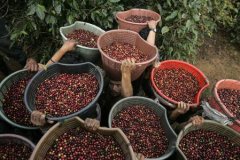
Explore how the origin of Colombian Coca Coffee affects the flavor change and manual data recommendation.
Explore how the origin of Colombian cauca affects the flavor change. Although Cauca is one of the most popular producing areas of the COE Cup, it is not as well-known as other provinces and regions, so there have been auctions such as the Cauca Best Cup Cup since 2014, jointly organized by well-known American traders, local exporters and the Colombian Coffee Association. The first examination card in 2014
Chemical reaction of Coffee in roasting
Coffee has a rich, wide range of flavors. Coffee produced in different regions, different elevations, different climates and different producing areas has its own unique characteristics. Raw beans are fragrant and have no usual coffee taste at all; the taste of coffee comes from proper roasting. Show fruity (light roasting) or caramel sweetness (deep roasting). The lighter the baking, the more sour it tastes. Baking.

Quickly learn the basic principles of hand-brewing coffee and explain the skills
Professional coffee knowledge exchange more coffee bean information please follow the coffee workshop (Wechat official account cafe_style) hand-brewed coffee principle we still need to return to the essence, extract
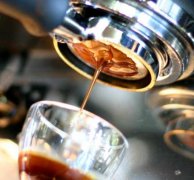
Chemical reaction of Fine Coffee in roasting
Coffee has a rich, wide range of flavors. Coffee produced in different regions, different elevations, different climates and different producing areas has its own unique characteristics. Raw beans are fragrant and have no usual coffee taste at all; the taste of coffee comes from proper roasting. Show fruity (light roasting) or caramel sweetness (deep roasting). The lighter the baking, the more sour it tastes. Baking.
Coffee Basics Chemical Reaction of Coffee in Roasting
Coffee has a wide variety of flavors. Different regions, different altitudes, different climates, different origins of coffee production have their own unique characteristics, green beans are fresh and completely without the usual coffee taste; coffee taste comes from proper roasting, showing fruity (medium light roast) or caramel sweet (deep roast). The lighter the roast, the more sour the taste.
Chemical reaction of coffee beans in roasting
Coffee has a rich, wide range of flavors. Coffee produced in different regions, different elevations, different climates and different producing areas has its own unique characteristics. Raw beans are fragrant and have no usual coffee taste at all; the taste of coffee comes from proper roasting. Show fruity (light roasting) or caramel sweetness (deep roasting). The lighter the baking, the more sour it tastes. Baking.
The basic knowledge of fine coffee coffee beans roasting stage explanation
Coffee is loved by people, the key lies in the aroma formed after roasting and the taste when drinking, because the coffee beans themselves do not have any special taste. Baking is to change and reorganize the internal substances of raw beans to form a new structure, which becomes a favorite drink with strong and mellow flavor. Roasting of coffee is a pyrolysis of high temperatures, which changes
Coffee technology common sense coffee roasting process
Once the coffee seed is planted, no one can change its final quality. But coffee's color, aroma, bioactive components, and health properties are related to the roasting process. In the roasting process, coffee is heated at a high temperature of 190-220 degrees for 7-20 minutes. This process helps to roast its aroma and good taste, and helps to form lactones, niacin, and anti-aging.

Coffee roasting Coffee Coffee making Coffee made at Home Coffee Italian mixed with beans
1 is the state of raw coffee beans, 2 is that coffee beans are heated at the furnace temperature 3. As the temperature rises, the free water in coffee beans begins to evaporate, and the beans begin to change from green to yellow. At this stage, beans still have obvious grass flavor. 4 coffee beans are further dehydrated, from light yellow to color similar to longan. At this stage, the free water in coffee beans is further removed, and coffee beans gradually expand 5.